

Introduction
Most websites look decent.
Some even look great.
But very few actually bring consistent inquiries.
Why?
👉 Because design alone doesn’t convert.
👉 Structure does.
A website that generates leads is not random—it’s intentional. Every section, every line, every button has a purpose.
Let’s break down how to structure a website that doesn’t just exist—but works.
🎯 1. Start With a Clear Hero Section
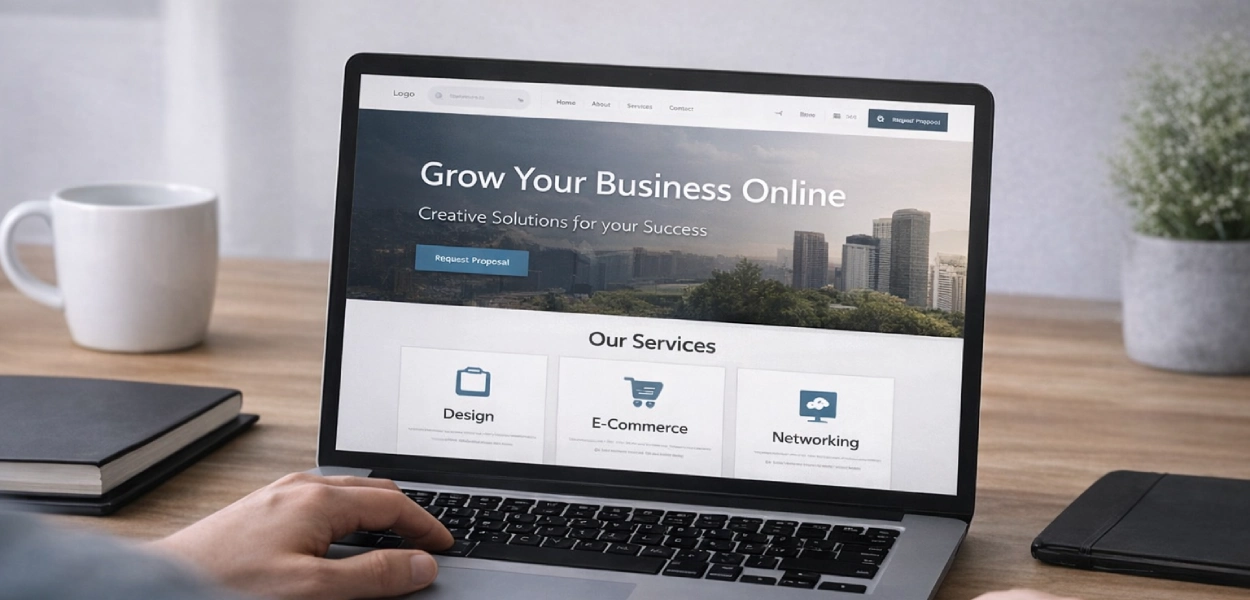
This is the first thing people see—and it decides whether they stay or leave.
A strong hero section should answer three things instantly:
- What you do
- Who it’s for
- Why it matters
✅ Must Include:
- Clear headline (not vague or creative for the sake of it)
- Short supporting text
- One primary call-to-action (CTA)
👉 If users don’t understand your offering in 5 seconds, they will leave.
🧠 2. Build Trust Immediately (Above the Fold or Right After)
Once users understand what you do, the next question is:
👉 “Can I trust this?”
You should answer that quickly.
💡 Add:
- Client logos or brands (if available)
- Testimonials or short reviews
- Key metrics (projects, experience, results)
👉 Trust removes hesitation.
🧩 3. Clearly Present Your Services
This is where most websites go wrong.
Instead of dumping information, your services should be:
- easy to scan
- clearly explained
- visually structured
✅ Best Approach:
- 3–6 service cards
- short descriptions
- clear outcomes (what the client gets)
👉 Focus on value, not just features.
⚙️ 4. Add a Strong “Why Work With Me” Section
This is your differentiation.
People are not just choosing a service—they are choosing you.
💡 Include:
- your approach
- your strengths
- how you work
👉 This is where you turn interest into preference.
🧭 5. Guide the User With Flow (Very Important)
A high-converting website follows a logical flow:
- Understand
- Trust
- Explore
- Decide
- Act
Each section should lead naturally into the next.
👉 If your website feels scattered, users won’t convert.
🖼️ 6. Use Visual Hierarchy (Not Just Design)
Good design is not decoration—it’s guidance.
✅ Use:
- proper spacing
- clear headings
- consistent typography
- contrast for CTAs
👉 Users should know where to look without thinking.

📱 7. Make It Seamless on Mobile
More than half your visitors are on mobile.
If your site:
- feels cramped
- has poor spacing
- or hard-to-click buttons
👉 You lose leads instantly.
💡 Focus on:
- readable text
- clean stacking
- easy navigation
📞 8. Place CTAs Strategically (Not Randomly)
Most websites either:
- have too many buttons
- or hide them completely
✅ Ideal Placement:
- Hero section
- After services
- After “Why Work With Me”
- Final section
👉 Your CTA should feel like a natural next step, not a push.
🔄 9. Repeat Key Messaging (Consistency Builds Clarity)
Your message should stay consistent across sections.
If your positioning is:
👉 clarity, performance, design
Then every section should reinforce that.
👉 Repetition builds confidence—not boredom.
🚫 10. Remove What Doesn’t Help Conversion
This is underrated.
Ask yourself:
👉 “Does this section help the user decide?”
If not:
- remove it
- simplify it
- or improve it
👉 Less noise = more clarity = more conversions.
⚖️ The Difference Between a Good Website and a Converting One
❌ A Typical Website:
- looks nice
- has information
- but lacks direction
✅ A High-Converting Website:
- is structured
- is intentional
- guides the user clearly
- makes taking action easy
🏁 Final Thoughts
A website that brings inquiries is not about:
- fancy animations
- trendy layouts
- or excessive content
👉 It’s about clarity, structure, and flow.
When done right, your website becomes:
- your best salesperson
- your strongest first impression
- your most consistent source of leads